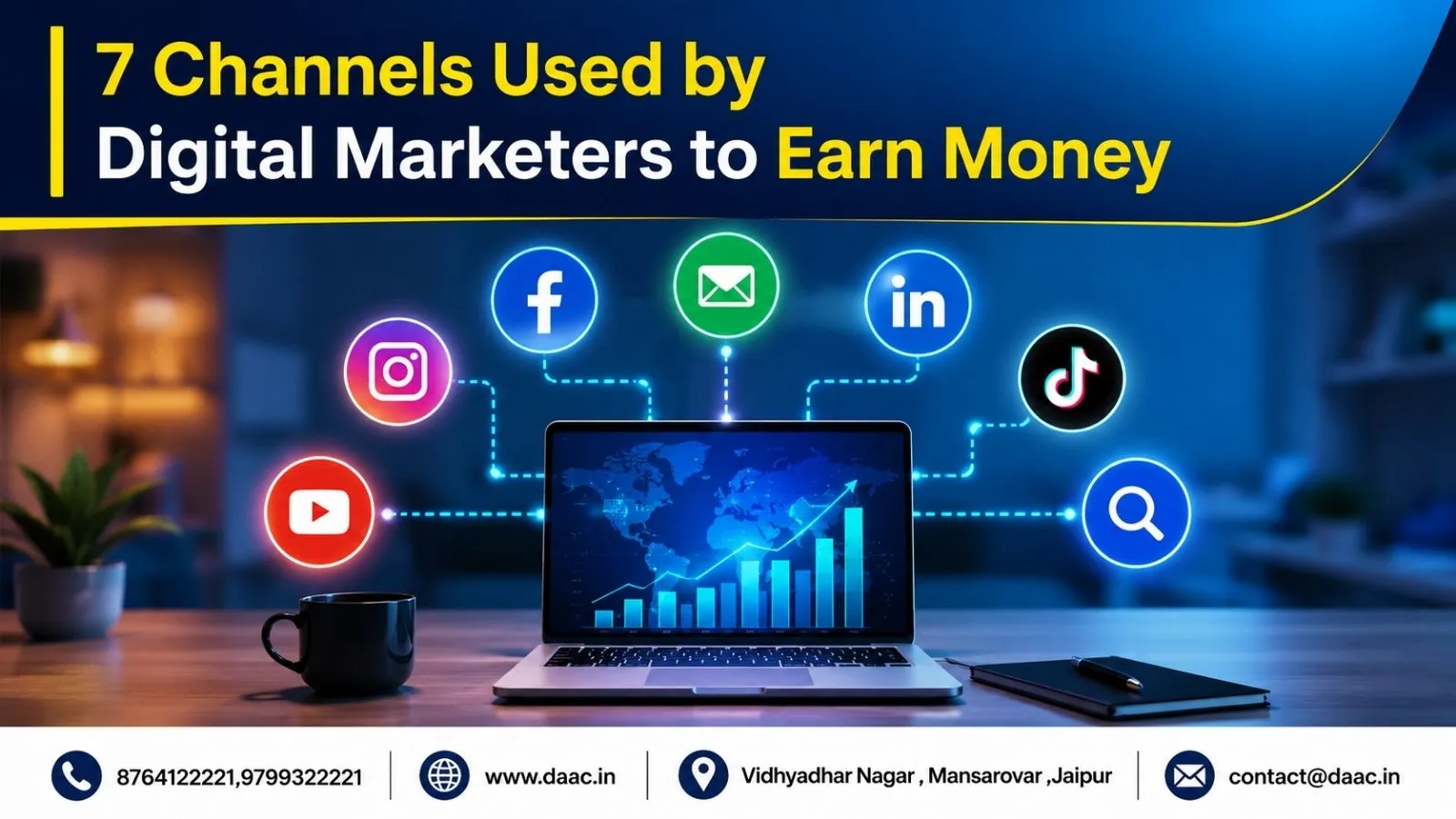
Digital marketing has become an important career option in today's technology-driven economy. Businesses increasingly use online platforms to reach customers, generate leads, increase sales, and build brand awareness. This shift has created opportunities for professionals to earn through full-time jobs, freelancing, consulting, and their own businesses. Understanding the most effective Digital Marketing Channels helps marketers choose the right specialisation and identify ways to turn their skills into income.
Each channel serves a different purpose. SEO builds organic visibility, paid advertising generates targeted traffic, social media develops audience relationships, and email marketing helps businesses nurture customers. Successful marketers understand how these channels work individually and how they can work together to achieve measurable business goals.
What Are Digital Marketing Channels?
How online marketing channels work
Digital marketing channels are online platforms and methods businesses use to communicate with potential customers. These include search engines, social networks, websites, email, and mobile platforms. Each channel helps businesses reach people at different stages of their buying journey.
For example, a customer might discover a business through a Google search, learn more through a social media post, and eventually purchase a product after receiving an email offer. Marketers use this behaviour to create connected campaigns that support business objectives.
Why businesses invest in multiple channels
Relying on one channel can limit a business's reach. A combination of organic search, paid advertising, useful content, and customer communication can help businesses attract new audiences and maintain existing relationships.
For marketers, learning multiple channels can create more career options. However, understanding the fundamentals of each channel and developing expertise in at least one area is often more effective than trying to master every platform at once.
1. Search Engine Optimization (SEO)
How SEO helps marketers earn money
Search Engine Optimization improves a website's visibility in unpaid search results. Businesses invest in SEO to attract relevant visitors, increase enquiries, and generate sales over time. SEO professionals can earn through full-time employment, freelance projects, agency work, and monthly consulting contracts.
Common SEO responsibilities include keyword research, on-page optimisation, technical audits, content planning, internal linking, local SEO, and performance monitoring. Professionals who can identify website problems and recommend practical improvements provide value beyond simply inserting keywords into content.
Skills and earning opportunities in SEO
Marketers can specialise in technical SEO, local SEO, content optimisation, or SEO strategy. Freelancers may offer website audits, keyword mapping, local business optimisation, or ongoing SEO services.
Earning potential depends on experience, the complexity of projects, client budgets, and the results delivered. Beginners should practise using SEO tools, analyse real websites where permission is available, and build sample audits to demonstrate their skills.
2. Pay-Per-Click Advertising (PPC)
How paid advertising generates revenue
Pay-per-click advertising allows businesses to display ads on search engines and other digital platforms. Advertisers generally pay when someone clicks an ad, while campaign success is measured through outcomes such as leads, purchases, and return on advertising spend.
Common platforms include Google Ads, Microsoft Advertising, and paid advertising options on social networks. Businesses use these platforms to reach specific audiences, test offers, and generate traffic more quickly than organic strategies typically can.
Ways PPC specialists earn
PPC specialists can work as advertising executives, campaign managers, agency professionals, or independent consultants. Their responsibilities may include keyword selection, audience targeting, budget management, ad copywriting, conversion tracking, and campaign optimisation.
To develop this specialisation, learn how to structure campaigns, measure conversions, and interpret performance reports. Understanding the difference between clicks and profitable conversions is essential because high traffic alone does not guarantee business success.
3. Social Media Marketing
How social media creates business opportunities
Social media marketing helps businesses connect with audiences, promote products, share useful information, and build relationships with customers. Platforms such as Instagram, Facebook, LinkedIn, and YouTube support different marketing goals depending on the audience and content format.
Effective Social Media Marketing involves more than publishing regular posts. Marketers need to understand audience preferences, develop content strategies, maintain consistent branding, respond to customers, and measure performance.
How social media professionals earn
Professionals can earn by managing business profiles, preparing content calendars, creating short-form videos, handling community engagement, and running paid social campaigns.
Freelancers may work with local businesses, online stores, educators, or service providers. Building a portfolio with sample posts, campaign plans, and performance reports can help beginners demonstrate their capabilities. Avoid promising viral growth or guaranteed follower numbers because results depend on many factors.
4. Content Marketing
Why valuable content attracts customers
Content marketing focuses on creating useful information that helps an audience understand a topic, solve a problem, or make a decision. Common formats include blog articles, videos, case studies, guides, newsletters, and infographics.
Well-planned content can support SEO, strengthen brand credibility, answer customer questions, and help potential buyers understand a product or service. Effective content addresses audience needs instead of simply promoting a business.
Ways content marketers make money
Content professionals can work as content writers, blog managers, strategists, video scriptwriters, or freelance creators. Some charge per article or project, while others work on monthly retainers or full-time salaries.
To build this skill, practise researching topics, organising information, writing clear content, and editing for accuracy. Learn how to match content with search intent and business goals. AI tools can assist with brainstorming and research, but fact-checking, originality, and editorial judgement remain essential.
5. Mobile Marketing
How mobile marketing reaches customers
Mobile marketing uses smartphones and other mobile devices to communicate with customers. Strategies include SMS campaigns, push notifications, mobile-friendly landing pages, app-based promotions, and location-based messaging where appropriate.
Since people frequently browse, shop, and communicate through mobile devices, businesses need campaigns that are easy to read and use on smaller screens. Poor mobile experiences can cause users to abandon forms, pages, or purchases.
Career opportunities in mobile marketing
Marketers can specialise in mobile campaign management, app marketing, customer engagement, or mobile conversion optimisation. Their work may include improving mobile landing pages, planning notification campaigns, monitoring app installs, and analysing user behaviour.
Success requires understanding customer consent, privacy requirements, message timing, and campaign performance. Marketers should also test mobile experiences across devices and avoid sending unsolicited promotional messages.
6. Email Marketing
How email supports customer relationships
Email marketing helps businesses communicate directly with subscribers and existing customers. Companies use email to share product updates, educational content, offers, newsletters, and personalised recommendations.
Automation allows marketers to create workflows triggered by actions such as signing up, abandoning a cart, or making a purchase. When used responsibly, these campaigns can support customer retention and repeat sales.
How email marketers earn money
Email marketing professionals may work as campaign executives, lifecycle marketers, automation specialists, or consultants. Their responsibilities can include list segmentation, writing subject lines, designing campaigns, setting up automated workflows, and analysing results.
Learn how to measure delivery, clicks, conversions, and unsubscribes rather than relying on open rates alone. Respect consent, provide unsubscribe options, and follow applicable privacy and email marketing rules.
7. Website Marketing
How websites support digital marketing results
A business website acts as a central destination for visitors coming from search engines, advertisements, social media, and email campaigns. Website marketing focuses on making that destination useful, trustworthy, accessible, and easy to navigate.
Important areas include landing page quality, website speed, mobile usability, calls to action, content structure, and conversion tracking. Even when a campaign attracts relevant visitors, a confusing website can prevent those visitors from taking the desired action.
Earning opportunities in website optimisation
Professionals can work in conversion rate optimisation, landing page management, website content, analytics, and digital experience improvement. Their tasks may include reviewing user journeys, identifying friction points, testing page layouts, and improving enquiry or purchase processes.
Understanding basic HTML, analytics, user experience, and conversion measurement can strengthen a marketer's ability to improve website performance. Changes should be evaluated using reliable data rather than assumptions alone.
How to Earn More by Combining Digital Marketing Channels
Develop a specialised skill set
Learning several channels helps you understand how a complete campaign works, but choosing a specialisation can make your services easier to explain and sell. For example, you might focus on SEO for local businesses, paid advertising for online stores, or social media management for service providers.
Build your expertise through practice, relevant projects, and regular analysis of campaign results. Keep examples of your work that clearly explain the objective, actions taken, and outcomes achieved.
Offer services that solve business problems
Clients generally want outcomes such as qualified enquiries, better visibility, stronger customer engagement, or increased sales. Instead of selling a list of tasks, explain how your service addresses a particular business need.
For example, an SEO freelancer might offer an audit and optimisation plan, while an email specialist might help a business improve its welcome sequence. Set realistic expectations, agree on measurable goals, and report progress transparently.
Career Opportunities and Learning the Right Skills
Career paths across digital marketing
Knowledge of these channels can prepare learners for roles such as SEO Executive, PPC Executive, Social Media Manager, Content Marketer, Email Marketing Specialist, Digital Marketing Executive, and Marketing Analyst.
Career progression depends on practical skills, communication, analytical thinking, and the ability to connect marketing activity with business results. Freelancing and consulting are also possible, although they require client management, pricing, and business development skills in addition to technical knowledge.
Build practical experience before seeking clients
Beginners can create sample campaigns, prepare SEO audits, develop content calendars, and practise analysing marketing data. Clearly label simulated projects and use genuine results only when they are supported by real campaign data.
Structured training can help learners understand the fundamentals, practise with relevant tools, and organise their work into a portfolio. When comparing programmes, review the current syllabus, practical assignments, trainer support, and career guidance rather than choosing based only on promotional claims.
Conclusion
Digital marketing offers diverse ways to build a career and earn income through SEO, PPC, social media, content, mobile, email, and website marketing. Each channel requires practical skills, continuous learning, and a clear understanding of business goals. DAAC offers digital marketing training in Jaipur for learners exploring this field. Review its current curriculum and practical learning opportunities, and explore the Digital Marketing Course in Jaipur to assess whether it aligns with your career goals.